Tuesday, April 24, 2007

Math 25 Changes

This term I am teaching Math 25 for the first time. This is a class about group-work activities involving practical math.

Ideally, the class gets through three activities each week. There are seven weeks of "core" activities required by the different academic majors that use Math 25 as a graduation requirement or prerequisite.
  • Week 1: Percent Review, Restaurant Tax and Tips, RCMP Licensing Percents
  • Week 2: Checking Accounts, Budgeting, Mortgages and Annuity Tables
  • Week 3: Simple and Compound Interest, Charge Options
  • Week 4: Retirement Planning (and Midterm #1)
  • Week 5: Health Formulas
  • Week 6: Payroll, Employee Taxes
  • Week 7: Floor Plans and Scale Drawings, Markup, Discount
Three subsequent class days are for assessment. There is a second midterm. There is a math "skills test" during Week 9 that looks a lot like a Math 20 midterm. A big portfolio focusing on an out-of-class project is due after once class day devote to letting students finish it up in class.

The other class sessions are for "instructor discretion" activities. In other words, past instructors have composed a collection of activities and each term whomever is teaching the class picks 3-5 of these, makes up their own, or lets students pick which to do. (The last day of class is usually set aside for review before the final exam.)

Due to the needs of the different majors making use of Math 25, some aspects of the class cannot be changed. Students are supposed to be learning how to apply mathematical problem-solving techniques to situations they have not seen before. So the class must focus on group-work about real-life activities. The instructor may not lead students by the hand through these activities by presenting similar problems to mimic or by answering so many student questions that step-by-step answers are provided. Neither may activities be grouped by which mathematical techniques apply to them.

(These requirements are understandably unpopular with many students. It would be much easier for them if we went through all of the "percent of percent" activities together, with lots of example problems to mimic and step-by-step guidance. But students would leave the class have gained little helpful experience in problem-solving.)

Four weeks into the class, it is clear that the following changes would be helpful. I am still tweaking the details of each for fine tuning, and soliciting student feedback on these ideas and other suggestions...
  • The "skills test" should happen at the end of Week 2 or the beginning of Week 3, in addition to happening at the end of the term, with students being graded on their highest score. An early version would encourage students who did not master the Math 20 material to visit office hours early in the term for help. Students who had mastered Math 20 material could do well the first time and have the option of skipping the test in Week 9 when they have a lot of work due in their other classes.
  • Probably once (but maybe twice) there should be a class day devoted to remedial review of Math 20 material. Students who did not need this would not attend this class and instead do an out-of-class activity. This activity, representing 1 of 20 class days, would be worth 5% of the overall grade, which would be a 5% that the students receiving the remedial help would be forfeiting. But those students are not aiming for an A+ anyway, and an entire class focused on their needs would help a lot more than 5% over the course of the term.
  • The next time I teach math 25 I will probably not do any of the established "instructor discretion" activities. Instead, I will push back the "core" activities two weeks, so these do not begin until Week 3. This would provide time at the start of the term to carefully develop the skills students have learned in Math 20 into a real "toolbox" of techniques with which to approach real-world math problems. For example, the concept of "percent of percent" occurs in multiple activities (RCMP Licensing, Compound Interest, Retirement Planning, Markup, Discount), but currently in a way that appears haphazard and confusing to many students; if that concept was solidifed before a bunch of activities were presented then the students would be better prepared to see these activities as using something from their "toolbox" instead of each being an isolated task needing its own procedure to solve it. Problem-solving approaches are themselves a valuable "toolbox tool" needed in this class, which could also be taught during the first two weeks.
Unrelated to the class itself, this term more students than before are having trouble with LCC's Moodle website. There is not much I can do if the web browser on their computer at home is set to not download certain file types. But over the summer I should definitely use a college computer with Camtasia to record an "introduction to Moodle for students" screen-capture movie with voice narration.

Long Hair Update

I wrote about a month ago about paying a little more attention to my long hair. Some quick updates...

I've purchased a wooden comb, which does work better with wet long hair than the brush I was using. It's also easier to keep clean. But I simply bought the first one I saw, and should probably get one with wider gaps between teeth.

Trader Joe's citrus conditioner is increasingly all my hair needs for cleaning, and shampooing less often has helped my hair become much less prone to tangles. It has a few cleansing agents which do the job unless I have been in an usually greasy environment. (It is free of "cones", for those who care to know.)

I've learned to braid my hair, but am not very good at it yet. Dividing my hair into thirds with "top, lower left, and lower right" as per this post works well even with a braid that starts at the nape of my neck. I've only worn it this way in public once.

Eat Like a Monkey

I often each lunch at LCC in the Math/Science faculty lounge. One of my colleagues often has a banana with his lunch, and always opens them from what I call the "bottom", meaning the flower side, not the stem side.

This is just as easy to do (if not easier once you have a little practice), and if you squish the banana at all then all you squish is the end you don't eat anyway.

Last Shabbat I was telling this story to another friend, who replied that he knew this trick already. He has a friend from the Philippines who routinely tells American tourists, "Monkeys know how to open bananas, why don't you?"

First Century Worship vs. Transformed Rabbinic Worship

What a Messianic Jewish congregation's culture looks like is very important, for two reasons.

It is important practically for individuals, because it provides the answer to the question, "Yeshua has given me victory over sin... now what?" Gentile churches tend to answer this question by providing people with programs. To the Jewish mindset, programs are impersonal and uncaring. It is better to have culture, which is relational and caring.

Culture explains what to do each day and what special things to do on holy days. Culture explains how to do things: ways to pause and focus on God throughout the day, ways to spend time with God alone or with other people, ways to study scripture, ways to pray, ways to use Torah obedience to express love for God, etc.

The only program P'nei Adonai has is our "Introduction to Messianic Judaism" class. I tried getting rid of it, but it turns out I can't. There's no way to have a Messianic Jewish lifestyle answer people's questions quickly enough without some forced help.

What a Messianic Jewish congregation's culture looks like is also important for group identity, because Yeshua came not only to transform the lives of individuals but also to establish a community that continues his work and represents his name and body. Our congregational culture provides the answer to the question, "What part are we in the body of Messiah?"

In one sense the Messianic Jewish answer to this second question is summarizable: we are the part of the body of Messiah that cares about being in relationship with the local and global Jewish community, and that helps Gentile Christians come to fullness in their responsibility (of Romans 11) to stir unbelieving Jews to a jealousy of relationship with Yeshua. But in another sense this question needs a cultural answer, not merely a purpose statement. What does our part of the body of Messiah look like?

For any Messianic Jewish congregation there are two obvious answers to both of these cultural questions.

One answer is to have the congregational culture based on the culture of those who worshipped Yeshua in the first century. After all, an imporant part of Messianic Judaism is understanding what that culture was like, when those following Yeshua were still a sect of Judaism, before the faith had been reworked as a new and distinctly anti-Jewish religion. There are two issues with this answer: much of that first-century culture is simply unknown to historians; of what we do know, how much is appropriate to transfer to our current time and place?

Another answer is to have congregational culture try to look like what the local, modern Jewish community would look like if revived and transformed by faith in Yeshua. This is also an appealing answer, becuase it makes sense that a Messianic Jewish congregation would look like what it hopes its surrounding Jewish culture might become. There are again issues: what would this new culture look like? how much of the diversity of Jewish culture should one congregation try and represent?

During the past three months, we at P'nei Adonai have realized that we were trying to grow in two different directions. Without realizing it, we were trying to be both like a first-century congregation and like a revived and transformed modern Jewish community. Since these to models disagree in many ways this caused problems.

We have also realized that our particular congregation must be the modern version of a first-century congregation. This is more appropriate for us and our calling for a number of reasons.

For the remainder of this essay I'll share four issues that are examples of how where disagreement was happening, and why in each case the first-century model is more appropriate for us.

None of these responses are meant to imply that a modern Jewish community revived and transformed by faith in Yeshua would not eventually do what needs to be done equally well. Rather, the first-century model provides much more guidance about where to start and what to look like.

(1) A Messianic Jewish congregation should provide a family-like community for people. It should also provide a variety of resources to help people who are not regular attenders grow spiritually.

Many American believers are looking to religious groups for resources instead family-like community. (Of these people, many already are part of another religous group with family-like community but that group is not able to offer them all the resources they desire. In days past they would simply have been frustrated, but in modern America people are used to networking and finding the resources they want.)

This dynamic is especially relevant to Messianic Jewish congregations, since part of that calling is to help Gentile Christians understand the Jewish roots of their faith to help them have a more meaningful relationship with Yeshua and also to help them stir unbelieving Jews to jealousy. We need to be offering resources to people who seldom (if ever) set foot inside our doors.

The first-century Jewish synagogue had this balance. It was in part a weekly house of prayer for its regular attenders. But it was just as much a provider of resources: Jewish families would pay dues and in exchange receive emergency aid including family burial costs, temporary food and lodging, and medical assistance. The synagogue also provided these families help resolving interpersonal disputes and tutoring in scripture study. Once followers of Yeshua began forming their own communities these same services were offered to outsiders for free.

The modern American synagogue (or local Jewish community) is not known for this balance. What resources does it provide to outsiders, especially non-Jews? (They do provide generous charitable aid to Israel, which is not local but is still within the greater Jewish community. Other ways they give may be present, but tend to be not well known and of small scale.)

(2) Spiritual growth is the responsibility of the individual.

Scripture is clear that every person is responsible for their own relationship with God.

Community can surely help. People in family-like community can support and encourage each other, and keep each other accountable. A community's leader can provide resouces, guidance, and protection.

But congregations that try to make spiritual growth the responsibility of the entire community or its leaders see most people stagnate. This happens in both Jewish synagogues and Christian churches. The scriptural model of the assembly is not a shepherd caring for passive sheep, but an overseer providing teaching and resolving disputes for a congregation of active people with a priestly and evangelistic identity.

The first-century followers of Yeshua initially participated in the established local synagogue on Shabbat mornings while meeting together at the close of Shabbat. Later, as they encountered increasing resistance from the Jewish authorities, they established their own congregations. Paul writes of only two congregational leadership roles, equivalent to the well-known roles of synagogue leader (teacher and judge) and "shamashim" (custodian and hospitality help). No other roles were invented and the community's primary purpose remained individuals supporting individuals growing increasingly holy and near to God.

The modern American synagogue (or local Jewish community) is not known for helping people with their continued growth in holiness and nearness to God. To the contrary, participating in the synagogue or community is in many placed equated with a healthy religious life, replacing that better goal. Group participation and public displays of virtue often replace an individual's responsibility for actual spiritual growth.

(3) A congregation should model transformed lives and the virtues of faith, selflessness, charity, kindness, and simplicity.

All of these things were what the early followers of Yeshua were known for among non-believers. Even their enemies admitted that believers exemplified these things as individuals and communities.

None of these things are what modern Rabbinic Jews and their communities are known for. The stereotypical American Jewish community is busy dealing with people-problems, humanist and agnostic, inward-focused, works-based, full of gossip, and not at all about a simple faith.

(4) The Messianic Movement should responsibly interact with other current moves of God.

Currently God is doing something among American Gentile Christians, stirring a desire for personal renewal, recommitment to God, and a life full of passion for God. (In contrast, earlier American moves of God were usually about evangelism, not recommitment among believers.) Messianic Judaism should be responsible and try to work with this while preserving its own identity and calling.

This is related to what was mentioned earlier about people being newly willing to move beyond the boundaries of their own "Church home" to find additional resources, and how a Messianic Jewish community should offer resources about the Jewish roots of Christianity.

Our recent congregational Passover seder was a nice example of this dynamic. About 50 people attended, and about half of those were people with a different "Church home" who left thanking myself and P'nei Adonai for hosting a worshipful, meaningful, and educational evening that had helped them better understand God's ways and plans.

Regarding this issue the first-century community model has much to offer. There are too many details to explore in this essay. A summary is simply that even if not all believers are called live in first-century ways, a Christian who is thinking, "I'm saved and now what?" is usually well advised to look for answers by considering how first-century believers lived.

The modern American synagogue (or local Jewish community) also has a lot to offer. There are numerous examples in America of synagogues and churches working together, often using guest sermons to give Jews a better understanding of their Christian neighbors and to give Christians a better understanding of the Jewish roots of their faith. However, Christians asking "I'm saved and now what?" don't look to Rabbinic Jewish groups for answers about how to have more intimacy with Yeshua.

Tao of Yeshua: Chapter 45

45
The most flawless seems cracked.
But it never wears out.
The greatest fullness seems empty.
But it never runs dry.
The most straight seems crooked.
The most skillful seems clumsy.
The most eloquent seems awkward.
Stamping overcomes cold.
Stillness overcomes heat.
Purity and stillness are normal in All-under-heaven.

The Father is present even when he appears absent.
The Spirit fills us even when we feel empty.
Yeshua is righteous, skilled at saving, and speaking truth.
In stillness we can see these things.

Three Letters from Teddy

I've read the story "Three Letters from Teddy" a couple times before. I suppose most credentialed teachers in the U.S. have done so.

Still, the new slideshow of it made my cry a little. (Since I'm at work, I had the sound off. I wonder if that matters for the emotional impact of such things.)

Friday, April 13, 2007

Absentmindedness

Happy April!

I have had a lot on my mind lately about congregational stuff, which turns into a lack of blogging until I am a bit more complete with processing these thoughts. (Some topics are conducive to use blogging to help my process thoughts, but not these).

In the meanwhile, some humor.

Yesterday I finally, for the first time in my teaching career, was spaced out about which day of the week it was and had someone stop by my office to tell me my class was waiting for me downstairs. Oops. Fortunately, my students were forgiving that I wasted some of their time.

This actually was not the most absurd instance of absentmindedness during the past few weeks. On April 2nd I had a very busy day: phone calls in the early morning, leading an "Introduction to Messianic Judaism" class in the mid-morning, preparation for and teaching of a math class at LCC in the middle of the day, getting the home ready for Pesach in the early afternoon, and leading a congregational seder for fifty people all the rest of the day. Everything went quite well, but I was kept from feeling too much like I was "on top of things" by noticing, as I got ready for bed, that all day long I had been wearing my boxer shorts backwards.

An important part of Messianic Judaism is that congregatns disciple each other to be more like Yeshua, not more like each other. May this blog post remind my congregants not to try to be like me, but to be like Yeshua! He knows what day of the week it is, and wears his underwear properly.

Friday, March 30, 2007

Stuff on Cats

Actually, one more quick post as a Shabbat present for everyone.

I mentioned earlier the websites with silly cat pictures.

Someone has since shown me Stuff On My Cat, which is often even sillier.

UPDATE: Apparently there was once even a website that allowed people to easily make silly cat pictures.

Long Hair

This past week has been very busy, with preparing to teach a math class I have never taught before, preparing taxes, and preparing for the congregational seder. The longest block of time I had to relax was Monday evening, after I had gotten my monthly allergy shots and because of them was too tired to do anything.

That evening I shown this post about how people took care of long hair before the invention of modern hair care products and techniques. It was an interesting read, especially since my hair is now down my back to the bottom of my shoulder blades.

One of the links at the bottom of that post was the Long Hair Community, which was just the type of thing my fatigued brain was looking for. I read some of those articles for an hour or so. Later, my wife recommended the Beauty Brains website as well.

I quickly realized that women "geeking out" about long hair was as much a specialized form of communication as scientists or computer gamers "geeking out" about their topics, in both abbreviations, jargon, and habits of speech. The most humorous example was how it took me a moment to realize that CO meant "conditioner only" instead of "carbon monixide".

A lot of what I read I did not understand well, which I attribute mostly to the specialized language, but also ascribe some guilt to the exhaustion induced by the allergy shots.

I did get a few ideas to try. None of these will be surprising to most people with long hair. But I'm just a guy whose wife wanted him to grow his hair out, and no one ever taught me these things.
  • A wooden comb is nice for long hair. Unlike a brush with plastic bristles, it does not collect hair and that grey lint stuff. Since it is wooden it has no seams, and thus does not snag.
  • I was shampooing and conditioning my hair most mornings. This is not necessary. These days, conditioners are almost as good at removing gunk as shampoo. Now I am trying shampoo once or twice per week to get rid of oil and grease, and the other days using conditioner in the manner of shampoo. I shed a lot less hair in the shower this way.
  • From what I read, wet hair is more fragile than dry hair. I should minimize brushing/combing my hair after my shower, doing my thorough brushing/combing before. I'm willing to try this, but cannot tell any difference over the past few days.
Well, time to go to bed. I do have a big backlog of things to blog about, both ministry-related and otherwise. Maybe you will begin to hear about such things on Tuesday, after the congregational seder is done.

Saturday, March 24, 2007

Thoughts about Worship

I was recently at a very nice discussion about what it means to be a worshipper, and to be a worship leader in a congregation. Here is a copy of my notes from that discussion. Credit for ideas, and thanks, go to Ted, Charles, Lynn, Russ, and three others who many not want their names publicized.
  • Worship is expressing love and adoration to God without self-consciousness. Since worship is ascribing worth to God it can be done in private, but is more "true" when done in public.
  • If we are afraid of not appearing polished or acceptable, we will not be able to properly focus on God.
  • Worship aids creativity, artistic expression, and revelation.
  • Liturgy helps remind of us all the kinds of things we should say to God. Prayer without liturgy helps us learn about ourselves.
  • Music is "Messianic Jewish" if it has the perspectives of a Hebraic worldview and the Messianic Jewish vision.
  • One purpose of gathering on Shabbat as a congregation is to create an opportunity for each person to offer something to God. This is traditionally song, scripture, teaching, or revelation (see First Corinthians 14:26). It can also be anything that helps others worship, even the hospitality of making the room conducive to worship by setting up nicely, greeting people, playing music, or otherwise modeling or promoting an atmosphere of freedom led by the Holy Spirit.

Tuesday, March 20, 2007

Worn Out

Okay, enough blogging for today. I'm getting all worn out.

Turn Signal Bumper Sticker

Silly!

I want a bumper sticker with the motto of Tom Foster, a high school math teacher I had: "Homework is the foundation of civilization". But I'd put it up at my office, not on my car.

Dr. Helen ponders what bumper stickers say about their owners' personality. Now I'm a little worried.

Out of Print Comic Books

I only collect a few comic books: Ps238, Astro City, Lone Wolf and Cub, and Usagi Yojimbo. Except for PS238, which has not yet released such a compilation, I wait for the comics to come out as a book-bound "graphic novel".

The first is just cute. It's about an elementary school for kids with super powers. It is the reason I go to the local comic book shop a few times per year.

The second is, in almost every issue, a literary masterpiece. It begins with a series of adventures of comic books characters that are quite similar to familiar ones, but ten times as interesting and human. Then it did a long story arc that was the most interesting exploration of faith I have ever seen in a comic book. Recently it was exploring how living in a place with superheroes would affect the lives of normal people. Sadly, it seems to have stopped being written sometime during the last year.

The third is a classic about a child growing up in a world of violence, corruption, and lechery -- living in that world but not being of it. There are a lot of striking parallels between his dedication to bushi and a believer's dedication to Yeshua. I find reading the issues I own is not only entertaining but a reminder to not become soft, or compromise my dedication to a life dedicated to God. I certainly would not recommend this last comic to kids, and I find books 19-26 too repulsive to enjoy (these focus on a really unpleasant villain, an expert in poison who is vile in many ways). It is a completed series, but I do not yet own all of 1-18 and 27-28.

The last explores the same themes of honor and purity within the corruption and violence of Edo-period Japan. But it's written for kids. Rather than being one long story, Stan Sakai is retelling classic Japanese myths and legends using animals. His characters are wonderful, and what make the comic worth owning. In some way's it is a Lone Wolf and Cub for children, but that is not really describing it well.

Anyway, I recently saw two places on LiveJournal designed for people to share scanned copies from their favorite out-of-print comics. For example, here are unusually interesting stories about Doctor Octopus and the Hulk. Clearly most of these site's readers would buy copies if they were available: this is the collector fan-community "geeking out" together. I wonder if the comic book artits and publishers are upset at the copyright infringement or not? Perhaps they must avoid encouraging this but are quitely appreciating knowing which old comics to both reprinting without losing significant business?

Two Bridges

Pretty.

Amazing.

Nina Lobkovskaya

Last Thursday I got to see another slideshow put on by Nathan Fendrich. I learned, among other things, about the role of women in Russia's "Great Patriotic War".

During WWII, the Russian army was known for its snipers, most of whom were women. Among the Russian army during the war, the most famous and inspiring of these was Nina Lobkovskaya. She joined the army at 17, and by the age of 20 had over 300 kills, mostly interrupting the Germain supply caravans.

Women were also dominant among the night bombers. I assume that, like the snipers of Veshnyaki, these were full-time soldiers. But I also imagine someone smiling at the children she put to bed, then heading out the door to do another bombing run.

I wonder why no computer game is about these women? A classic WWII PC game, Call of Duty, has several scenarios about Vasily Zaytesev, probably because that game was made shortly after the film Enemy at the Gates. Since game companies so often gripe about their inability to make games appealing to young women, you would think they would do more than watch a movie, and do the little research required to find out the most famous sniper of all was named Nina.

UPDATE: As long as I'm describing Russian military stuff, has anyone else noticed how the knife-throwing technique of Russian commandos is identical to that of Japanese shuriken darts?

Bread is Dangerous!

Here is some humor for the gluten-intolerant.

MySpace and Instructor Reviews

I have a MySpace page now.

At LCC, students do on-line class evaluations at the end of each term.

Ideally they would provide thoughtful and constructive comments about the class content and textbook (departmental decisions) and the instructor's teaching style, testing style, willingness to provide extra help, etc. Sadly, students rarely say more than a sentence or two.

Even more sadly, their comments are not accessible to other students wondering about which instructor to take a class from next term. Ideally the comments would be visible anonymously but linked to relevant statistical information (i.e., the brief comment "Easy class" is not very informative if made by someone who always earns A's in math, just as the comment "Very confusing" loses credibility if the commentor has enrolled in the class three times and always drops it during the third week).

There are two websites that try to fill the need of students reading each other's class evaluations. One is at MySpace, and only visible to people with a MySpace account. Some of my students talk about it, and others wanted to know the link. Thus I needed to get an account, to be able to see the page and send out the link to my students.

The other place is RateMyProfessors.com, which I first heard about from P.D.

Needless to say, neither of these sites provides any information about the commentor to help a reader know how much to treat the comment as relevant or credible, and few of the comments are verbose enough to provide clues.

It is also true that often students simply do not know why choices were made or what alternatives are available. For example, a mediocre textbook might unfortunately be the best one available for that topic, or an apparently strange item included in the class's content might be required by state law. But for most issues of this type are not relevant to the reader looking for which instructor to study under: there are no alternatives or reason to select one instructor instead of another.

Use snail mail, Luke!

Well, at least one R2D2 Mailbox has appeared in Eugene now, next to the Law School at U. of O.

That's pretty cool, but not as extreme as this Honda.

Now we just need Yoda fire hydrants.

Or a big Balrog in cavernous Japanese sewers. (If you have ever actually been part of an argument about whether a Balrog has wings, go to the head of the class.)

Thursday, March 15, 2007

Everyone Panic!

This is for all the parents of those two-year-olds who express being mildly distraught by running around in circles crying and/or yelling for help.

Schizotypal for God!

I recently read a very interesting lecture by Robert Sapolsky about four neurological conditions and how they relate to religion. Since Sapolsky is lecturing in a manner quite antagonistic to God I'll recommend that my devout readers postpone reading his lecture until after I finish introducing concepts in this blog entry. Also, I am only going to discuss the schizotypal personality, since it is the only item that normally relates to ministry work.

First, recall all of the instances of a bell curve in the distribution of human traits. With all sorts of physical characteristics (height, weight, arm strength, keeness of eyesight) most people in a population are "average", a few people are above or below average, and the further from average the fewer the number of exceptions.

Some mental traits also fit this pattern. People might hotly disagree on what IQ tests really measure, but in most populations the scores on IQ tests definitely fit a bell curve.

Psychologists have, fairly recently, been finding more mental traits that fit a bell curve. One of these mental traits is what American Christian culture might call "dysfunctional legalism". Someone that is noticeably above average in this is said to have a schizotypal personality; someone extremely above average is called schizophrenic.

Notice that I'm not voicing any opinion about how much this variance is due to nature or nurture. Like IQ scores, I'll leave that discussion to others.

Consider the observable tendancies that accompany diagnosis of schizotypal personality. I'll describe these observables as I often see them in ministry work:
  • treating a source of authority (i.e., scripture) as if it had a single, unarguably obvious interpretation
  • unrecognized superstitiousness, including the habit of trying to understand every circumstance as a meaningful message
  • inability to discern if thoughts, visions, and dreams of from God or not, manifest as a track record of fruitless and often contradictory decisions based on what were claimed to be revelations
  • overly suspicious, continually anxious in social situations, and showing a refusal to see excessively worrying about tomorrow as a sin (Matthew 6:24-34)
  • difficulty maintaining emotionally close relationships, manifest in a complete lack of close friends (usually besides a relative or two)
  • eccentric and odd appearance and behavior
What is new news in the field of psychology is not that people have such traits, but how this collective set of traits normally appears in an "average" amount, with some people having more or less than average amount of this collective set of traits, exhibited among the population in an extent that follows a bell curve pattern.

As a minister I sometimes have to deal with people visiting the congregation who are clear examples of this "dysfunctional legalism". They are never happy people demonstrating the peace and joy of knowing God intimately. They are "high maintenance" and for the duration of their contact with the congregation try to suck up as much of my time as they can and also create small problems as they interact with congregants.

To some very small extent I can help these people let God give them more peace and joy. I try. The congregation would be a very poor example of the Kingdom of God if I and other congregants did not try. These people are trying to be devoted to God -- often trying very hard. But it is not working. No one understands them, and they are often haunted by the suspicion that that even God does not understand them, made worse by their conviction that they understand God very well.

Helping such people is always fatiguing work, and once they move on I always wonder if the benefit will wear off after a few weeks. So it is very interesting to now read Sapolsky's lecture and other essays that share how psychologists are finding that what I've dubbed "dysfunctional legalism" is a well-ingrained part of personality by adulthood, and similar to height and wieght in both distribution through the population and in difficulty to change.

More Blogger Navbar

Heh.

I suspected as much, but finally had time to check...

Regarding my "generic webpage" Blogger template (see this recent post), the code I eventually found needed to be put near the end of the file to include a Blogger navbar at the bottom of the page actually works as part of the HTML of any webpage. For some reason this seems quite amusing.

The most recently created blog of the user who is logged in to Blogger seems the default for if the navbar is used to search or add an entry to "this blog" on a non-blog webpage.

I doubt there is any useful application for this. It's just silly, something in the wrong place.

(I suppose if someone really blogged a lot, they could give themselves the ability to start a new blog entry at a moment's notice by creating a two-frame page as their web browser's home page, of which the bottom frame was nothing but a 30 pixel high Blogger navbar.)

Wednesday, March 14, 2007

American Jewish Demographics Update

I wrote a long post a while back.

Some more recent but quite similar statistics are discussed in this news article.

Tuesday, March 13, 2007

Making Blogger Bend Backwards

This blog post is a short tutorial about how to use Blogger to make what appears to be a normal web page.

Why am I inventing and sharing this? Some instructors at LCC are experimenting with ways to have students prepare online portfolios.

If you have clicked on my Moodle website for my Winter term Math 20 classes you have seen what works well within the LCC community for dealing with online learning. But all of these options for grading, commenting on assignments, and so forth are not really what a student wants perspective employers to see.

A nice, clean, stand-alone webpage is needed, with which a student can make an e-portfolio. Here is an example of a college that has such a thing. The students there use special (not free) e-portfolio software to edit a template that creates a simple page with a header image, some text, a picture or two, and links to their best assignments.

Since LCC is having a budget crisis, I was asked to help design a free solution for our students to use. They can already put assignments online using Moodle; all that is needed is a nicer presentation for potential employers. So I spent a couple hours this afternoon forcing Blogger to do the job.

(I admit half that time was spent figuring out how to move the Blogger navbar to the bottom of the screen. Arg. But I would not want college policy to be violating the Blogger terms of service, nor to trouble a barely computer-literate student by removing the obvious "Customize" link to update the page.)


Now anyone can make a simple web page, after being shown the basics about the P, IMG, and A HREF tags, by following the following directions.

(a) Make a new blog using Blogger.

Go to http://www2.blogger.com/ and make a blog. Go ahead, do that now in a second browser tab or window.

First you will need to set up an account with Blogger, if you do not have one already. Then it asks you a few quick questions to determine what your blog's URL will be and what it looks like. Pick any template, since we are about to delete it anyway.

(b) Replace the template

After making your blog, you are automatically put into the screen where you make your first blog entry. Type anything and then click "Publish".

If you want, click "View Blog" to see what you are about to destroy. If you do this, click "Customize" on the Blogger navbar at the top of your blog to return to settings.

Go to where you can change your template. Click on the "Template" tab at the top of the screen, and then "Edit HTML" just under that.

Now you see all this complicated HTML in a scrollable sub-window. Click anywhere there, and then use CTRL-A and the backspace key to delete it all.

Use copy-and-paste to replace all that HTML with the contents of this file. (Use CTRL-A a second time to select all of that file for copying.) Click "Save Template".

(c) Edit the template

Finally edit the bottom of my text so the paragraphs, images, and links are what you want.

(Some more detail for those who know a little about HTML: in between the BODY tags it works like a normal web page, with a few idiosyncrasies about needing to formally close P and IMG tags; just don't change anything in the HEAD section or what is above that.)

Yang Tai Chi Sword 55 Story


My Tai Chi Sword class at LCC is almost done. The test was today. Thursday is my last class. As a fun extra credit assignment, I put the names of all 55 movements into a story, in order, and read it during class. It was not difficult: all term long the movement named "Big Bird Opens its Wings" has made me think of Sesame Street, and the rest just flowed from there.

Note that these names are not standardized in English; an example of a listing is at the bottom of this page. Here is a video of the entire form, which I think I've linked to before. (The 55 movement form is rare on the internet, but the nearly identical 54 movement form abounds.)

I am not a Sesame Street expert, unlike one of my classmates. I had to use Wikipedia to find names such as Lew Zealand, and was unaware that Gonzo had never made a cameo apperance on Sesame Street.

For most readers this will probably be little more than a long exercise in poorly forced grammar. :-) But if you know the form, this is very silly.


All of Sesame Street was in the last stages of Preparation for the Chinese New Year's art contest. The paintings were being hung in Mr. Hooper's store for everyone to see.

Gordon and Susan had painted a winged horse flying through the night sky, making Three Circles around the Moon and then soaring over the Big Dipper. "We liked the past year," they explained to Mr. Hooper. "A winged horse represents something leaving too soon."

Big Bird had painted a scene of birds: three swallows and four phoenixes. He explained to Kermit, "The Swallow Flying Over Water flies straight at a goal, while the one Sweeping Right and Left over the prairie has no New Year's resolutions."

The Count had painted the entire Chinese Zodiac. To himself he stated, "Twelve animals (hah hah hah hah!), in a circle around the moon and the Little Dipper." Thunder and lightening happened briefly outside.

Oscar had painted animals making use of trash: a Swallow Flying Back to its Nest with bits of string, and a Weasel Chasing a Rat to get a fluff of comforter filling both wanted to use as a pillow.

Big Bird continued his explanation to Kermit. "The four phoenixes are a barbershop quartet. This Phoenix Raising its Head is the bass about to sing the low note in the series of four notes a barbershop quarter always starts with. Their first song is 'Molasses to my pancakes like a Wasp Flying back to its Hive.' The Phoenix Opening its Wings is the lead. The tenor is the phoenix that appears to be looking at the Count's Little Dipper. The Phoenix Opening to the Right is the baritone, ready to complete the chord."

Ernie arrived next. He explained his painting to Mr. Hooper, "A recent event with cookie crumbs in bed made me unhopeful about New Year's resolutions. They seemed as elusive as a Chinese dragon. So in my painting, that's me, Holding a Fishing Pole, trying to catch a water Dragon Walking on the lake bottom. Behind me, between my hands and chest you can see the moon. It looks like I'm Embracing the Moon in My Arms. That's because I'm grateful to have so much, even if I cannot always have my New Year's resolution. Then a Bird Flies Out of the Wood and the water dragons all want to chase it. This Black Dragon Swings its Tail and that Black Dragon Jumps from the Water after the bird. The bird will escape. But to show how strong the dragons are, see on the lake side how I painted the twisting and broken flowers? Its flight made Wind Whirling away the Lilies."

The store got noisy as the Yip-Yip aliens arrived. They had a small sculpture of animals going "Yip yip!". A lion did so as that Lion Shakes its Head. A tiger did so too (the alien carrying the sculpture did so by Holding the Tiger Head). A wild horse did so in fright as it nearly ran off a cliff. After the Wild Horse Jumps Over a Canyon it landed near a cliff, so its front hooves had dug in to the dirt, Holding Back the Horse from the Cliff.

Big Bird had another painting. "Snuffleupagus made this one," he said.

"Don't be silly, Big Bird," said Gordon. "There no Snuffleupagus."

"If it looks like a toddler painted it, that's because it's hard to paint with your snuffle," Big Bird continued, ignoring Gordon. "In this painting he and I are going sailing. That's me on the dock, Stepping up to Point the Direction to sail in. He is using his snuffle to make our old boat cushions nicer, Sweeping off Dust Left and Right. Those are the oars we'll use for Pushing the Boat."

"By the way, Gordon," added Big Bird. "I like Susan's and your painting. I like the matching curves where a Meteor Chases the Moon in a matching arc to the Winged Horse Flying Across the Sky."

Grover arrived with something big covered by a sheet.

"Is it a sculpture?" asked Kermit.

"Um…" hesitated Grover. He Lifted Up the Curtain and revealed something that looked like a combination Ferris wheel and marble run. Turning a crank, the Wheel Turning had Zodiac animals that picked up white marbles at the bottom and dropped them off at the top.

"I'm humbled," muttered Big Bird. "None of my contraptions are so nice." His face drooped, like a Swallow Picking up Dirt, and he sat down with a sigh. Big Bird Opened His Wings and then let them droop.

Grover explained his contraption. "The white marbles are moons, to symbolize luck. The Zodiac animals are Scooping the Moon from the Sea Bottom and then Embracing the Moon in Their Arms. I'm not sure why I did moons underwater. I guess I tried to make it look like a reflection on top of water but couldn't. Anyway, they all Search the Sea Bottom and move marbles except for this rhinoceros that always holds his marble. This Rhinoceros Looking at Moon is greedy and won't let go. He likes last year's luck and is trying to hold on to it.

Camilla the chicken entered, with a painting she had made of her and Gonzo in a circus act. Gonzo was with her to explain it. "She has been upset at me," he said. "She says that if she is a chicken I am a silly goose. I'm not a goose! But in her painting she's the one firing Gonzo the Great from a cannon, and it is entitled 'Shooting the Goose.' She shoots me into the sky, past a constellation of a Black Dragon Showing its Claw, but the dragon does not grab me. As I circle around the earth like a Phoenix Opening its Wings I eventually come back down and land in a field of marshmallows, bouncing wildly, Sweeping Left and Right. So that's 'Shooting the Goose.' She won't explain the marshmallows to me."

Gonzo's own painting was of a queen's palace. "These are scenes from the Arabian Nights, I think," he said. "The princess is reclining on pillows. A Monkey Presents Fruit to her: peeled grapes, since she is a fancy princess. In the background her servant is Sweeping the Floor Left and Right since princesses don't have to do housework. Her best friend is not royalty, of course. That's the Fair Lady at the Loom. There are tame but fierce looking animals too: a White Tiger Sweeping its Tail, and the other tiger of which the princess is Holding the Tiger's Head."

Lew Zealand entered, carrying his bucket of boomerang fish. His painting was also about fish. "I am eager for a New Year!" he said. "So I paint two thousand Fish Jumping Over a Dam. That is my expectant rushing!"

Bert finally arrived. He looked at Ernie's picture. "You've added another dragon," he said. "That Black Dragon Winding Around a Pillar underwater."

"Yes," said Ernie. "What did you paint?"

"I painted Mr. Hooper," said Bert. Mr. Hooper blushed. "He always gives good advice. I painted three old men who all represent him. This one is a Saint Pointing in the Direction. The pointing is about advice. This old man is Presenting Incense to the Sky. See my face hidden in the moon above the smoke? He's giving me smoke, which represents advice. Third is an old man Whirling Away the Plum Flowers. Those are my bad habits, and his advice helps me get rid of them."

The last Muppet to arrive was the two-headed monster. He carried a painting with a small bronze plaque on it that read, "To learn we must balance what is heard and what is read". The painting was a very stylized and abstract, but still clearly showed a student holding two things. The student was Holding a Tiger Head that had unusually big tiger ears, and was also Holding a Decree Tablet.

"Nicely done!" said Bert. "That looks very authentic."

Pleased, the two-headed monster proceeded to sound out opposites: "Yin, Yang, In, On." Then it reverted to its old habit of sounding out two-syllable words, taking a minute to put together the word "Happy" and then quickly able to add "New Year!"

Wednesday, February 28, 2007

Blue Skies Soon!

The Blue Skies Big Band is playing at the ELLA weekly swing dance on Wednesday, March 7th from 9 p.m. to 11 p.m. They are very talented and also easy to dance to!
The Tango Center (194 W Broadway, Eugene OR)
7pm: Intermediate Lesson, 8pm: Beginning Lesson
$7, or $5 with student ID

Cornbread

My wife found this gluten-free cornbread recipe. We changed it slightly, since we have different flours at our home. Very nice with chilli!

Local Synagogue Attacked

Usually my lack of reading the mainstream news is okay. But occasionally I miss out on information that actually should affect me promptly.

I just found out this morning that last Thursday Eugene's Orthodox congregation, Ahavas Torah, suffered a break-in. Its Torah scrolls and prayerbooks were targeted and badly damaged. A second article (an editorial) is here.

The Eugene Police have since those articles decided to investigate the crime as an Oregon law bias crime.

The local Jewish community is sending supportive letters to Ahavas Torah, and rallying together to help with with fundraising to replace the Torah scrolls.

Some of the local Jewish community is alarmed and fearful because the two suspects who had been arrested have been released. Officials have explained the two men were transients with no known connection with any hate groups, and not a danger to people.

They may not be much the local Messianic Jewish community can do to help. Some of the same Talmudic passages that give such honor and value to Torah scrolls would disqualify any fundraising we contribute for use in purchasing a Torah scroll since we are Messianic Jews.

Tuesday, February 27, 2007

Purpose Changes

I'm back to blogging, after almost being gone a month. I was occupied with other matters.

(Yes, I now have a backlog of silly things to blog about. But this post is mostly serious. It's also about my ministry work: the math teaching has also been taking a lot of time as I improve my teaching by using the Starboard system and Moodle.)

During the past month P'nei Adonai has had a lot of internal change, which kept me very busy.

We were led by God to change our purpose statement items, which are also how we organize our congregation's ministries.

(If your purposes are "worship" and "prayer" but your committees are "building and grounds" and "finances", you'll wind up doing poorly at worship and prayer. Purposes and committees need to match.)

Now we have five purposes:
  • Yirat Adonai (fear/awe of the Lord)
  • Teshuvah (repentance)
  • Ol Yeshua (discipling)
  • Avodah (laboring for God)
  • Mishpochah (family-like community)
It has been an interesting month. I do not know any other congregations with a "Fear of the Lord ministry" or a "Repentance ministry". We have had to prayerfully learn what those are, how to do them, and who should lead them.

Consider these questions:
  • How does this ministry affect the weekly service?
  • How does it affect special events? Which special events are centered on this purpose?
  • How does this ministry help disciple congregants to be better at this purpose?
  • What responsibilities resources does this ministry need to succeed?
Those questions have quite well-developed answers for those purposes/ministries which are common among congregations, such as "worship", "prayer" or "community service". How should we answer those questions for our five new purposes?

After a month, P'nei Adonai has some worthwhile answers. But I've been processing them for an entire month, quite thoroughly, and am not going to write about them here. For partial answers you can explore our new website.

(I also put together the new website. I had to learn some new CSS and Javascript, but am so far able to avoid Perl and other more complicated computer tricks.)

Personal Update

I should share a bit of personal news, for those who have been following my hobbies and afflictions.

I still can't ollie, but am slightly better at a manual (wheelie). The skateboard and LCC bus pass combination is wonderful, even in winter. I'm not sure if in Spring Term I'll take another P.E. class at LCC to be a student and get the free bus pass; my teaching schedule does not fit well with any P.E. classes that interest me.

I'm still enjoying Tai Chi. This term the class is Yang 55-move sword form, which requires much more balance and fitness than the Chen 18-move unarmed form I did last term.

I'm still enjoying a monthly accupuncture visit. It may be helping my joint oddness, but I cannot say for sure as my joints are also for these same months (since last August) helped by the Tai Chi exercise. The most measureable benefit of the accupuncture is that I now fall asleep quickly instead of after 40-60 minutes, and I have many fewer distrubing dreams.

(Last night was the first night in a very long time I did not fall asleep quickly, because I was so excited about finally getting things done: the P'nei Adonai purpose changes, which allowed me to finish its new website, which allowed an afternoon for just blogging, which will allow me tomorrow to catch up on e-mail.)

The math teaching has been a lot of work, primarily because I am preparing PowerPoint slideshows for every lesson. You can see them by going to the class Moodle site and logging in as a guest.

Besides playing with moss for a few minutes, there has been a lot of yard work too. This is the best time of year to climb up in all the fruit trees and prune them. Then all those pruned "runners"/"shooters" that go striaght up, and a few real branches, needed to be cut into pieces that could fit into the yard waste bit. That was most of two weekends' worth of yard work. Also, the local squirrels and racoons are out again: last year we moved 15 squirrels with our live traps, along with quite a few opossums and raccoons. We'll see what this year brings.

My wife and I also needed more firewood, and purchased two cords, which once delivered needed to be stacked. That was my outdoor time on the Presidents' Day three-day weekend.

I've found out that a few of my friends occasionally do go target shooting, and even know the locations of the best local BLM Land for such endeavors. But they do not go frequently enough to prompt me to do any NAA shopping. I still am happy not owning any guns, since I frankly don't desire any more responsibility.

Regarding baking, my wife has found out how to make gluten-free challah, and I discovered that my Belgian waffle recipe works even better without any butter. I've been having waffles more often, and have been baking my spice cookies as bar cookies for afternoon snacking. I also may have found out why I like garlic bread.

The science-fiction role-playing game has also had a breakthrough. My wife and I played one session, which led to a great excuse to nearly but not completely isolate the main planet from the rest of colonized space. This, in turn, allows me many opportunities for political coruption and rivalries (my favorite plots) since now it BridgeCo's motto of "Now There is Enough" is no longer true of local resources and social mobility.

Tao of Yeshua: Chapter 44

44
Which is more important, your name or your body?
Which is more prized, your body or your possessions?
Which is more destructive, your gain or your loss?
The more you spend on others, the more you will spend on yourself.
The more you store up, the more you will lose.
One who is content is safe from disgrace.
One who knows where to abide is safe from danger.
He will last long.

We cannot buy safety or happiness
for ourselves or for others.
Instead nurture your virtue;
in integrity help others have virtue.
This help can make an eternal difference.
Abide in Yeshua.

Once More Ninjas are Cool

The cool ninja fad has a new product: NinjaWords, the speedy online dictionary that allows you to crush your definitions, see them driven before you, and hear the lamentation of their synonyms.

(For a comparison of the quotations of Genghis Khan and Conan, refer to the final section of this page.)

Mad Science

I have a friend who is interested in memes. The concept interests me, as do some others that form the border between information processing, psychology, and technology.

For him, here is a link to a fun webcomic named A Miracle of Science set in a science-fiction world where a special police force attempts keeping the "Mad Scientist Meme" in check.

In somewhat related mad science non-news, the Badges of the OOTSSOERAAAP, why Indiana Jones was denied tenure, and a problem with retractable claws.

Hm. I wonder if Foamhedge counts as mad science?

Clearly an south-upward map doesn't. Because I find that interesting. ;-)

More Microsoft versus Apple Humor

Microsoft vs Apple.

(If you don't know why people are having renewed efforts to make fun of Microsoft, read this.)

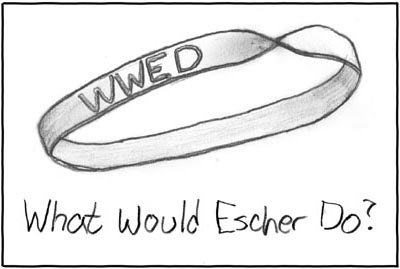
More gems from xkcd: WWED? and Binary Sudoku. (The last reminds me of Q-Tetris.)

UPDATE: I move a picture of an X-wing Honda to this post.

Baby Animal Pictures

Apparently nearly anything can be unbearably cute as an infant. Consider a handful of hedgehogs, octopus, or penguin.

Penguins, being mysterious birds, can when grown up can be scary. Hamsters stay cute, especially when in love.

Cuteness acquired by being a stuffed animal is cheating. Cuteness when fighting snakes counts extra.

Also, there is apparently some sort of new fad about annotating photos of cats. For example, happy cat, monrail cat, hubcat cats, trash cat, apology cat, voices cat, and the pair known as invisible sandwich and invisible bike.

UPDATE: Now two sites are trying to be the definitive collection annotated cat photos.

Squamous Warning

Be careful. Election season is beginning.

Scenic Pictures

Here is an interesting web page with a photography shoot comissioned by Microsoft, of which two entries were selected to be new official wallpapers.

Moss in a Blender

Late February in Eugene is the beginning of crocouses, daffodils, and resuming having to mow the lawn now and then.

My wife and I actually don't want lawn. We would rather have moss, as in a Japanese garden, since that is equally pretty and I am not allergic to it. Not having to mow would be nice also.

Since our back yard has a few bare spots (where I let leaf piles sit too long) we found out how to promote moss growth with a "moss smoothie." Here is a summary of what many websites instruct...

Put into a blender a handful of moss from the kind of place you want to grow moss (i.e., moss from dirt to make more moss on dirt, moss from a rock to make more moss on rock).

If collecting from the lawn, try to minimze the amount of dirt and grass you collect.

Add 1/2 teaspoon sugar and enough water so it will blend nicely. If you need stickines for applying it to rock or clay, add 1 egg or some buttermilk.

Blend the mixture, and then spread with a paintbrush or spatula on the desired surfaces.

Be careful it doesn't wash away. If the weather is not rainy, keep it wet. Moss should be growing within five weeks.

You can also make patterns.

Dice Wars

Here's a fun game named Dice Wars (link, rules and review) that apparently has been around for a while, but I only discovered two days ago. I've played it three times so far, and enjoyed it a lot, but expect it will get old very fast because the computer AI is so poor. At this point it is already down to "mindless and soothing".

There is a multiplayer version named kDice (link, rules and review). Apparently it requires Internet Explorer to run smoothly (on Firefox the game's map does not update). I do not currently have time play a game that a requires actual diplomacy and negotiations, and would hesitate to use IE on my home computer. But it's nice to see someone made this game for others to play.

Another soothing game I've tried once and had enough of, but others might enjoy more, is a game were colors spread across a grid, named Virus. The game is single-player, and the objective is to minimize the number of turns it takes to spread the color, sort of like solitaire Chinese Checkers.

If I had played more Doom in my youth, the new Doom rogue-like would be quite entertaining. As it is, I'm curious how well a rogue-like with sounds creates a mental narrative, but am not about to try that game. Currently soothing games are all I desire.

Sunday, January 28, 2007

Main Dish Menu

On Sundays my wife and I do a lot of cooking. Since she is vegetarian and so very gluten-intolerant we can use very few prepared main dishes, and Sunday is our day to get cooking done for the upcoming week.

I thought other people avoiding gluten might be interested in knowing what main dishes we commonly make. Here is a moderately exhaustive listing.

4 Quart Pot
Macaroni and Cheese
Greens and Garlic Soup
Potato, Onion and Garlic Soup
Vegetable Soup (various)
Risotto
Polenta
Quinoa Salad
Corn on the Cob
Artichokes
Stuffing (with gluten-free bread)

3 Quart Sauce Pan
Tomato Basil Soup
Pasta (Italian or Thai)
Boon Sen
Dal (various)
Sambar
Indian or Thai Curry
Saffron Rice
Masala Potatoes
Palak Paneer

Every Day Pan
Stir Fry Vegetables
Mu Shu Vegetables
Skillet Pancake (apple, berry, carrot, potato, sweet potato, or beet)
Fried Rice with Egg and Vegetables

Frying Pan/Omelette Pan
Scrambled Eggs or Omelettes
Sauted Vegetables
Japanese Omelette
Blintz Wrappers and Filling
Frittata
Latkes (various)
Green Beans and Mushroom Sauce
Pancakes

Nine by Thirteen Pan
Potatoes and Cheese
Mina
Strata
Apples and Yams
Masa Harena Casserole
Crisps and Cobblers
Indian Baked Cauliflower
Roasted Vegetables
Braised Eggplant
Tomatoes Stuffed with Eggs
Potato, Turnip and Broccoli Kugel
Blintz Casserole
Sweet Potato Casserole
Saffron Rice and Artichoke Heart Casserole
Quinoa Casseroles (Basil and Greens, Savory Vegetables)

Jelly Roll Pan
Pizza
Bread
Crackers
Squash
Power Bars
Baba Ganoush

Crock Pot
Beans (with tortillas or rice)
Soups
Chili
Garbanzo Beans/Falafels
Rice Pudding
Black Coconut Rice
Apple Cider

Other Pots and Pans
Souffle
Quiche
Fondue
Artichoke Dip
Filled Bread (savory or sweet)
Corn Bread

Special Salads
Charoset
Caesar Salad

Tao of Yeshua: Chapter 43

43
The softest of things overcomes the hardest of things.
That which has no substance enters where there is no space.
Few things in the world are as instructive as wordless teaching,
or as beneficial as the fruits of Non-Ado.

The Spirit can rule the body.
It does so subtly, without ado.
What instruction is comparable
to being taught directly by the Spirit of Adonai?
What virtues are comparable
to the fruits of the Spirit of Adonai?

Thursday, January 25, 2007

Tongues at a High Place

God asked me to pray on top of Skinner Butte, a large hill in the middle of this town of Eugene, Oregon. Today I went and did so.

I do not understand much about why scripture talks about "high places", or how they affect the spiritual. From stories shared by friends in Israel I know that praying on a high place can somehow "reclaim" it for God if it has used by the Adversary, and this can remove some of the Adversary's ability to spread lies. There must be more than that, but I am ignorant.

However, I can go and pray if God asks me to do so. Sometimes God will simply tell me what to pray when I get there. Other times what I should pray about is apparently none of my business, and God's Spirit will use me to pray "in tongues". (To be specific, I do not understand what I say, but from sound qualitiess and words that are sometimes repeated I seem to use two languages in such situations: not at the same time, and I have no idea why one or another language happens a situation.)

When I pray in tongues it's definitely a miraculous activity. At one time I was completely skeptical of the phenomenon, for I had only met the kind of people who claimed to speak in tongues but were only repeating a few syllables over and over. I eventually met followers of Yeshua who genuinely had this spiritual gift from God, and years later agreed to let someone with this gift pray that I might receive it. (I immediately did, which startled me for in my skepticism I had tried in privacy to speak random syllables and could not do so.)

When people speak normally there is a different cadence and tone when speaking a train of thought versus repeating an idea in multiple ways, when talking to someone versus talking about someone, when sharing joys or worries, when offering help or asking for help. Similarly, when I pray in tongues not only am I speaking words that I can tell have grammar (and sometimes even poetry) but I can glean a little about what I am praying about.

I went to Skinner's Butte with a congreant. Even once we arrived neither of us were told what to say, so I prayed in tongues. It was interesting, as always, to experience how it was somewhat of a diagnostic tool in the way I just described. Especially because the Butte is not a simply spherical hill. (It has a lower, western part of the "top" with the best view and a look-out area. It has a highest part with many trees and not much view. It has an eastern part with a less built-up look-out area and a decent view.) Each of its parts seemed to be receiving a different kind of prayer.

In the past I have (infrequently) experienced another kind of "praying in tongues", when God just took over my mouth and I found myself praying in English words I was not expecting, which later on in retrospect turned out to be perfect for that occasion.

Only once have I been part of a congregation's service in which the dynamic of First Corinthians 14:26-28 happened, with one person praying in tongues and someone else interpreting. I know of no congregations where this happens regularly.

Only once have I encountered the kind of speaking in tongues where someone miraculously gains fluency in a language they did not know.

At one point God asked me to practice praying in tongues. That seemed a bit comical since I had no idea how to practice. How could I know if I was pronouncing words correctly in a language I didn't know? But I did my best to be obedient to the task asked of me.

Anyway, that's what little I know about praying in tongues and the significance of "high places". Since that's more than most people blog about, I thought I'd share.

Tao of Yeshua: Chapter 42

42
One produced two.
Two produced three
Three produce all other things.
These other things carry the dark but embrace the light.
The breath rises softly to produce harmoniously.
People loathe being orphaned, widowed, or poor,
yet kings and dukes call themselves thus
for things may gain by decrease or decrease by gain.
What others have taught I repeat:
men of violence will not reach their natural death.
The father's doctrine is my teacher.

The world was created by three.
The divine Spirit gives freedom.
Rising within us, it frees us from serving darkness
so that we may succeed in embracing light.
The divine son gives mercy.
In unity with his humility may we gain through decrease.
The divine Father gives justice.
Greed and violence lead to ruin;
His teachings are the laws for life.
So is the world sustained by these three that are divine,
or by their freedom, mercy, and justice?

Monday, January 22, 2007

Bwahahahahaha

I just found out that Firefox knows how to accept "all current tabs" as the new home page setting.

I have a few icons in my "Quick Launch" that open my browser to a certain website. Now I can have an unspecified Firefox startup create a browser with five tabs for the pages I use most: my bookmarks page, gmail, calendar, blog, and LCC moodle class website.

Tao of Yeshua: Chapter 41

41
When a wise man hears about the Way he diligently follows it.
When a mediocre man hears about the Way he wavers between belief and unbelief.
When a foolish man hears about the Way he laughs loudly at it.
If it such a man did not laugh at, it would not be worth regarding as the Way.
For there is an established saying:
The Way's brightness can seem dim
The Way's advances can seem retreats;
The Way's smoothness can seem rough;
Our highest efforts are empty;
Our best purity are stained;
Our strongest efforts are inadequate;
Our established virtues are feeble;
The greatest solid is pierced;
The greatest square has no corners;
The greatest vessel is the last completed;
The greatest music has the rarest sound;
The greatest Image has no form.
The Way is hidden and nameless.
Indeed, because the Way is able to lend of itself it is able to provide completion.

Yeshua, as creator, is nameless
because he contributes anonymously to all creation.
Yeshua fits none of our categories
because he creator, not part of this world.
His best can seem backwards,
but lasts eternally.
But our best is not eternal
and thus comparatively worthless.
The last part of creation will be
when our creator finishes establishing himself.

Jewish Voice <> Jews for Jesus

(I'm not sure how to do a ≠ sign in titles, so you get the typewriter's <> version instead.)

Once again, the movement Messianic Judaism and the organization Jews for Jesus are confused.

For those who might also be confused, here are some differences:
  • Jews for Jesus is a specific Christian evangelical organization founded in 1973 by a Jewish-born Baptist minister named Moishe Rosen. Jews for Jesus is a mercenary branch of the Gentile church, funded by churches with the purpose of bringing people into churches. In contrast, the Messianic Jewish movement is a movement of Jewish people who believe in Jesus but feel called by God to retain and develop their Jewish heritage while worshipping in synagogues and helping their local Jewish community have the spiritual health God desires.
  • Jews for Jesus is an organization that uses a classic Christian model of evangelism with literature and street-corner conversations to bring people into (primarily) churches. Messianic Judaism is a collection of synagogues that sees Torah observance, empowered by relationship with Yeshua, as the key to a meaningful relationship with the God of Israel and what will bring transformation to the local Jewish community.
  • Throughout their short history these two groups have been at odds. Recently Jews for Jesus has shown some willingness to encourage new believers to consider Messianic Judaism as well as Gentile Christianity. Jews for Jesus does politely refrain from calling itself "Messianic Jewish" with the exception of the by-line for one of its publications, Issues.
  • To ensure accountability and provide support for Messianic Jewish congregations there are two organizations that "organize" Messianic Judaism, the MJAA and the UMJC (note that Messianic Judaism is not a "denomination" since congregations are more independent than if they had a denomination's formal governance). Neither the IAMCS nor the UMJC cooperate well with Jews for Jesus.

Ministers and Statistics

Yes, it is sad how badly people trying to represent Truth use statistics.

Walls of Partition

This article from Christianity Today magazine seems important to me. It mentions how many African-American ministers become weary of having to bridge the culture gap between "Black" and "White" in their local religious communities.

As a Messianic Jewish minister I deal regularly with pastors and churches that have an equally awkward culture gap. They schedule a community Pentecost event and wonder why my congregation can't also celebrate Shavuot by attending. They speak of how they value the Jewish roots of their faith, but lack the time or care to bring any of these roots into their congregational life. They are timid about exploring how to draw from the "rich inheritance" we share because they are afraid doing so at all must somehow imply other things they do are wrong.

(There are also some local pastors and churches that are actively embracing the Jewish roots of their faith, and do understand how to cooperate smoothly with a Messianic Jewish congregation. I don't want to describe an overly troubled situation.)

However, the Messianic Judaism is a movement, something birthed and empowered by God to help God bring transformation to Jewish communities and to churches. Besides sharing a sense of purpose that includes dealing with that awkward culture gap, Messianic Jewish leaders also network together and support each other. Both help tremendously.

It was sad to read in that article that apparently God has yet to raise up a similar movement of ministers dealing with harmony among ethnic groups. I know of a few organizations, such as Promise Keepers, that focus on this, but apparently there is no real movement -- or if there is then it's not very well networked and not accomplishing what God is intending.

Winter Term Week Three

Whew. January began with my wife being quite sick, then my traveling to a Messianic Rabbi's conference, and then my LCC teaching made crazy by snow days.

Now things are a bit more under control. I'm starting week three of the term with the entire week's lessons prepared. Yesterday I got a lot of work done on the new congregational website. I still have a ton of e-mails to catch up on, but I'm getting more caught up.

Hooray!

Cash Crops

When the president of Afghanistan recently spoke at the Wilson Center, he described the two biggest problems facing his country: the lack of enough well-trained police, and the lack of highways to allow small farmers to bring their crops to market.

More than half the GDP of Afghanistan is from poppies. That's another problem. But it's also true that marijuana is the largest of U.S. cash crops.

Thursday, January 11, 2007

Tao of Yeshua: Chapter 40

40
The Way moves by reversing.
The Way uses weakness as strength.
Heaven and earth and all things are reborn through the named.
The named is born out of the nameless.

Yeshua makes strength out of our weakness.
He recreates all things.
Yeshua as Creator was hidden as the Word.
Yeshua as Re-creator was revealed as the Son.

Vetinari

On the airplane I got ministry-related reading done, and enjoyed looking out the window at the snow and clouds covering the landscape below. I also had time to read some Terry Pratchett. I like the "Watch" subset of Discworld novels best.

Here's some interesting commentary. I had never realized Vetinari's name was half a pun.

Vetinari is such a great character. There is a man whose life expectancy was linked to education.

UPDATE: Why are the Discworld novels so neat? One reason is that none of their plots are nearly identical remakes of old ones (warning: link has profanity).

Stupdendous Pictures

Someone recently tried to pick "Thirteen Photographs that Changed the World". The comments, in which people debate the significance of his picks and other important photographs, were fascinating to read.

Someone else picked the Top Ten Astronomy Images of 2006. His explanations were fascinating.

Traditional Chinese or Sumi-E brush paintings of bamboo are surprisingly hard to find online. I found another. (My wife likes nice waterfall pictures, which are much easier to find.)

The only newsy picture from my recent days without blogging that is worth a link is the Rose Parade Stormtroopers with flags from around the world.

The best comic I missed reading while away was this one from Real Life, which wonders what it would be like if other businesses could operate as do video game stores.

Rumors Never Cease to Amaze

Also during my lack of blogging, Saddam was hung. I don't have anything to say about it except how amazing this quotation seems, in a startling sort of way (from a newspaper asking what Iraqis in Southern California thought):

"This will take of the rumor in Baghdad (and there is no shortage in rumors) that the Americans will put Saddam back in power before they leave."

Russian Jewish Pictures

Here are websites with interesting Russian Jewish pictures.

Wednesday, January 03, 2007

Feed a What?

Uhg. My wife is sick. I'm taking care of her a sleeping a lot so I don't catch it, but not getting much else done.

It turns out my wife and I rememred different versions of the old saying. That's because both versions have been popularized, and in general neither is true, except for a small short-term effect.

Friday, December 29, 2006

Not Quite the End of Vacation Week

I have not been blogging much this week. My wife took Tuesday through Thursday as vacation days (she automatically got Monday and Friday off) so we could have a whole week of vacation together. She has been getting my time, so I have not done much blogging or e-mail.

Thursday, December 28, 2006

Tao of Yeshua: Chapter 39

39
These, of old, attained unity:
Heaven attained unity in its clarity.
Earth attained unity in its tranquility.
The angels attained unity in their activity.
The deep attained unity in its fullness.
Creation attained unity in its fruitfulness.
Kings and princes attained unity in ruling by worthy example.
Unity sustains these.
If heaven was no longer clear it would fragment.
If earth was no longer tranquil it would shatter.
If angels were no longer active they would dissipate.
If the deep was no longer full it would be exhausted.
If creation was no longer fruitful it would become extinct.
If kings and princes no longer ruled by worthy example they would fall.
For greatness has the humble as its root.
The exalted is built upon the lowly.
Therefore the kings and princes call themselves orphans with meager inheritances.
They regard the humble as their root!
Too much honor leads to no honor.
Do not shine like jade on display.
Be a lowly foundation, scattered like gravel.

We fulfill our purpose
and maintain our identity
through unity with Yeshua.
In this manner we are useful to others,
and are honored without seeking honor.

Monday, December 25, 2006

Tao of Yeshua: Chapter 38

38
Pure virtue does not focus on itself as virtue;
therefore it has virtue.
False "virtue" always asserts itself as virtue;
therefore it has no virtue.
Pure virtue makes no ado and is not self-serving.
False virtues make ado and are self-serving.
Kindness makes ado, but is not self-serving.
Propriety makes ado and is self-serving.
Rituals of etiquette make ado, and not finding response, bares the arms and become aggressive.
Thus:
After the Way is abandoned, false virtues are asserted.
After false virtues are abandoned, kindness is asserted.
After kindness is abandoned, propriety is asserted.
After propriety is abandoned, rituals of etiquette are asserted.
Rituals of etiquette are the mere husk of loyalty and good faith, and the beginning of disorder.
Knowing what will come is merely fruit of knowing the Way.
Focusing on future trends is the beginning of folly.
Therefore, the mature Saint is concerned with the substance, not the husk.
He focuses on the seed and not the fruit.
He prefers what is within to what is without.

Focus on Yeshua, not virtue.
The more you know Yeshua
the more virtuous you will become.
But focusing on virtue will not
help you get closer to Yeshua.
After people stop focusing on Yeshua
first they design their own morals
then they try offering kindness to everyone
then they invent norms of socially correct behavior
then they become aggressively legalistic
and finally there is chaos.
Those who follow Yeshua
will see this as it happens.
But do not focus on it!
Focus on Yeshua.

A Cute Tiny Bunny

Just because.