Monday, July 14, 2025

Hearthstone Fishing Priest for Summer 2025

The CompetitiveHS subreddit had a nice discussion about a deck archetype called "Fishing Priest" or "Menagerie Priest".

Here is my summary about the deck in this week after the Lost City of Un'goro expansion, archived here when I can find it more easily.


There is a basic core package of 19 cards:
  • Brain Masseuse, Catch of the Day, Lunarwing Messenger, Orbital Halo, Papercraft Angel, Shadow Ascendant, Spirit of the Kaldorei, Chillin' Vol'jin, Trusty Fishing Rod, Menagerie Jug

This week there is a strange but very popular deck named Murloc Paladin for which we do not want to kill its initial minions. So we add these 7 cards:
  • Acupuncture, Dreamsplanner Zephrys, Kaldorei Priestess, Observer of Mysteries

The final four cards for overcoming Murloc Paladin are not settled. They are most often Overzealous Healer and Bitterbloom Knight.  But perhaps more direct damage such as Light of the New Moon x1, Tyrande, and Void Shard x2 would work better?  Or perhaps I only think that because I have yet to draw Menagerie Jug when it was useful?

When not focused on Murloc Paladin we instead add these 9 cards:
  • Ship's Chirurgeon, Hot Coals x1, Workhorse, Blob of Tar, Resuscitate

Then if we are focusing on overcoming aggro more generally as the final 2 cards we use Kaldorei Priestess.  Otherwise we focus on dealing with value/control and as the final 2 cards use Bitterbloom Knight.

Tuesday, August 16, 2022


My kids and I have started enjoying BTD6 together.

I am experimenting with the upgrade Come On Everybody! so here are my notes about Primary towers.

Dart Monkey
0-2-5 costs 31K good for straightaways (target last) and ceramics

Boomerang Monkey
2-5-0 costs 45K good for midgame [cannot hit camo or lead]
one 2-0-4 set to strong for MOAB Press (from Boomerang 0-0-4)

Bomb Shooter
1-3-0 costs 3K good for blimps [need L4 for black, cannot hit camo]

Tack Shooter
?-4-0 costs 4K good for midgame [cannot hit camo or lead]
?-5-0 costs 20K good for late game especially with Pat Fusty [cannot hit camo]

Ice Monkey
one 4-1-0 costs 5K removes camo and regrow
0-1-? costs 3K, 5K, or 37K, get icicles by round 63 [cannot hit camo or lead]

Glue Gunner
0-?-3 costs 4K+ and made affordable by top path Village, combo with MOAB Press (from Boomerang 0-0-4) or with Bloon Sabotage (from Ninja 0-2-0)

Tuesday, June 21, 2022

Mix Tape

My generation made mix tapes for friends.  It is something my kids won't do.

How should you arrange 60 or 90 minutes of your favorite music?  What shared memories did you and the friend have with the songs, or with their topics?  What story would the songs tell?

I made my best mix tape during my college years.  The titles of the songs told a story.  Perhaps I was proposing to a girl I loved.  I also made a copy for myself, of course.

Born at the right time, summertime, it's not easy being green: land of confusion, time, and tideMad about you, gypsyRight by your side life is a carnival, closer to fineSilent night, we close our eyesWhen you awake we'll be togetherStand by me time after time; then you can tell me goodbye.


I thought about that mix tape yesterday because my younger son wants to play his favorite song repeatedly as background music while he plays Deeprock Galactic with his brother.  He even found it on a one-hour loop, to maximize his happiness (and his brother's frustration).

So I made my kids a Dad's Playlist today.  I left out quite a few sentimentally significant songs in an effort to limit the playlist to one song by each artist.  I put my son's song first, so he would not have to wait for it, even though it is new to me.  Hopefully having a wider variety of fun and catchy songs will bring them peace.

Sunday, January 30, 2022

Why I Love the Dishonored Games

My current favorite computer games are Dishonored and Dishonored 2.

This is not surprising.  I loved the Eidos Thief games.  These two games are their successors, with some of the same design team.


The dramatic theme of the series is once again what makes people turn into monsters, what type of monsters people turn into, and how the main character is already on that path and can embrace it or change to find redemption.

The game has very few actual monsters.  Having just a few (weepers, nest keepers, a few specific characters) works right.  It keeps the existence of monsters present in our minds without changing the focus from people becoming monsters into the very different dramatic theme of physical reality being invaded by monsters.

Remember that historically, the classic monsters were all designed to explore the issue of people becoming monsters.

  • Werewolves are people that loose control of themselves and become violent, usually at night (drunkenly abusive fathers and husbands).
  • Vampires are wealthy nobles who sustain themselves by draining their peasants.
  • Ghosts are people who are dead but still cripple our options (when a depressed person hears in their head "You'll never be any good at..." whose voice is it? usually a parent if it ends "...anything", although often a teacher if it ends "...math" or "...school").
  • The Frankenstein monster explores the danger of when technology becomes unnatural.

We have all heard so many stories with the dramatic theme of people becoming monsters.  It now takes a light touch, and a story without too many monsters, to continue that literary legacy.  Arkane manages to make Dishonored 1 do it very well.


The "nature versus technology" theme was stronger in Thief 1 and Thief 2 but is present in this series too. It gets more significant as the story advances with the existence of Tall Boys as "mechanized troops" in Dishonored 1, and the clockwork robot-like soldiers in Dishonored 2. How should society balance nature and technology? Both can get too extreme. How should we responsibly get energy and metals? Etc.

The Tall Boys are people who take drugs and use tech to make them merciless killers, even when killers of innocents. The robots have programming instead of morals. Both are discussed in notes and conversations. The initial ability to provide better security at a small number of key locations seemed vital at that time to stabilize society.  But what should society do once these killers become commonplace enough to guard a noble's party or police the streets? How should a hero act around them compared to normal guards?

Electricity also allows more game mechanics. We can bypass obstacles by unplugging whale oil tanks, using rewire tools, turning off windmills, etc. In Dishonored 2 there are even "electrical boxes" the size of large crates as part of the scenery that will knock out opponents pushed into them. We can also use electrical obstacles to our advantage, such as by tossing certain objects into a Wall of Light to make it flash and kill a guard who it normally does not harm.


Of course, nature magic is held opposite to technology.

We eventually see three kinds of magic in the Dishonored games.

  • The Outsider's mark grants very controllable powers to a very small number of people.
  • The Outsider's runes cause stranger, uncontrollable thoughts and actions among many people (especially those who build a shrine in their home).
  • Witchcraft involves using plants, pigments, and bone or blood to "siphon" void energy into specific purposes against the Outsider's will.

So just like technology, there are people who use it well to make a living, people who get lost unproductively in TV Tropes, and people who use it for nefarious purposes its inventors did not intend.

Just like in the Thief games, having inventors be major characters in the game makes that comparison more obvious.  Unlike the Thief games, in Dishonored 2 some inventors and nature-witches become allies.

I did like how witch magic was almost done in this game as a two step process.

First you make an oil painting: you literally paint the world as you want to will it to become.  However, your painting must show a tree. With witchcraft you speedily grow a matching tree in the real world to "pencil in" a connection between your painting's alternate reality to the real world.

Then you create runes made of the painting's pigments, its matching tree, and death (human bones) as magical capacitors to "shock" into existence an active magical connection.

That's not quite what witchcraft is in these games. But it is close, and easy to understand without playing the games.  It shows the unique slant on witchcraft in a fantasy setting that still draws from traditional witchy tropes of art, nature, bones, etc.


I adore how the first game is a great example of a tragic story that is not about your character.

Dishonored 1 is not Corvo's story.  I'll explain.

Considering literary analysis (not time in the spotlight) the Lord of the Rings trilogy is Gollum's story. Not only are the crucial plot details about his choices, from the beginning to the end, but he continues making choices and developing as a character more dramatically than any other character.

Similarly, the first six Star Wars films are Anakin's story.

Dishonored 1 is Admiral Havelock's story. Yes, he wants Emily on the throne, but he is always clearly desiring to mold and guide her--to be the real power behind the throne. The contrasting rules of Jessamine and Hiram are baselines by which Havelock (and the player) considers what a good ruler is like, how a ruler should treat Emily and Corvo, how much a ruler can save or damn Dunwall, etc.

Havelock is like Gollum. His choices, from the beginning to the end, are the foundation of the story. His continued choices, and his character development and self-doubt, drive the story forward.

The game works with missions instead of an open world because Havelock is the character with the most character development, not Corvo.

In other words, our character is dishonored because he has fallen from being a lord and is now merely a tool used by those who retain social honor.

(Click that link.  It's a fascinating read!)

In contrast, in Dishonored 2 the main villain is Delilah, who neither continues to make choices nor demonstrates character development. The sequel thus feels much more like our story.


Another way the Dishonored games are successors to the Eidos Thief games is the theme of fascism.

Something I read the other day:

An individual life consists of mistakes, according to Aleksandr Solzhenitsyn, and so does history. The strong, he says, know how to lead and also how to obey, whereas the weak "require the illusion of independence." Order, no matter how complex the social organism, rests upon some kind of chain of command or multiple chains of command. Order is more important than freedom, since without order there can be no freedom for anybody.

Solzhenitsyn is not talking about free will, so do not read that into his use of the word freedom. He is claiming that if we want the grocery stores to have full shelves, and the lights to come on when we turn on the light switch, we need structures that include leaders and followers, we need people who organize and people who get things done. The freedom he cares about is being able to buy what you want, and have light when you want, and enjoy all the other benefits of a functional society. To be "strong" in this model is to be willing to lead or follow as needed. To be "weak" is to deny your place in the structures and believe you are supporting society when you are really only parasitically enjoying the fruits of its success.

It's as good a summary as I have found for how the games' Abbey of the Everyman wants society to function.

It sounds a lot like fascism, which isn't surprising because Solzhenitsyn was an admirer of fascism.  So is the Abbey and its Overseers.


One last dynamic.

It is fascinating how Dunwall and Karnaca, despite being big cities, are carefully designed to most resemble a frontier setting by sharing many genre elements with locations set in the American West, Edo-period Japan, and other frontier tropes where a lone protagonist can make a difference.

Here is something I wrote for my own notes when designing a paper-and-pencil RPG setting years ago that I just realized applies to Dunwall and Karnaca.

On the frontier life is dangerous. Villages and towns are threatened by monsters and bandits. Nevertheless, most settled locations have a few loners living on the outskirts due to temperament, profession, or outcast social status. These loners are often in need of help from a single individual, or able to assist a single individual in efforts to clean up trouble in the nearby settled location.

Because of these dangers, most adults carry weapons. (Or perhaps only adults of one gender or social class.) Also, most people cannot afford the price or encumbrance of significant armor, and medical healing is expensive or rare. Thus a lone protagonist can often win a fight by being skilled enough to avoid being hit while injuring enough attackers to cause the remaining opponents to flee. A frontier hero often has special options for effective healing: rare medicines, foreign herbal remedies, or esoteric meditative practices.

Because so many adults are armed, society focuses on honor more than law. Mistakes are kept secret, and significant characters are haunted by one or more great mistakes from their pasts. Because is difficult to govern an honor-focused, armed society at the geographical outskirts, government does little. Big government is distant or nonexistent. Local government is often corrupt and has insufficient money to do more than law enforcement and perhaps oversight of road building and utilities. When leaders do govern justly they are too busy dealing with intrigue to effectively promote social welfare. Most adults pay little in taxation and receive little in services. When big government does appear it interrupts normal life to handle a crisis, chase a criminal, install a trade route, or claim a natural resource.

Because government does little, other groups provide support in crisis situations. Clans, guilds, gangs, or religious congregations pool resources as insurance against medical problems, natural disasters, and urban crime and fires.

Finally, because government is small and people are reliant upon social groups corruption can control a settled location. A social group that grows into a dominating organization can reign unchallenged until a wandering hero or heroine arrives.

Together, this means problems are obvious and local. A monster threatens a farming village, instead of an army of monsters threatening a kingdom. A tyrannical gang overtly runs the town, instead of a evil brotherhood secretly infiltrating every guild in the capital city.

Steps for Solving the Jindosh Riddle

After solving the Jindosh riddle, I confirmed there were already online guides. But I did not see any that provided the logical steps, so here those are. If it helps, read this as a spreadsheet.

r/dishonored - Steps for Solving the Jindosh Riddle

The riddle's first paragraph

We start by making an empty chart.

r/dishonored - Steps for Solving the Jindosh Riddle

We are most clearly told the name of the woman seated on the left, the color next to her, and (from the second paragraph) the drink in the center.

r/dishonored - Steps for Solving the Jindosh Riddle

We next can see which two colors must be in the two right-most columns. This also specifies a drink.

r/dishonored - Steps for Solving the Jindosh Riddle

The left-most woman has a different name from the name of the first woman mentioned. So the left-most woman must have the color whose city is known and be sitting next to a certain heirloom.

This puts the first woman mentioned in the center. We have now finished with the first paragraph.

r/dishonored - Steps for Solving the Jindosh Riddle

The riddle's second paragraph

We have two options for the woman making a toast. If she is in the rightmost seat, this leads to a contradiction with the drinker known not to be in the center.

r/dishonored - Steps for Solving the Jindosh Riddle

Therefore the woman making a toast must have the only heirloom known so far.

r/dishonored - Steps for Solving the Jindosh Riddle

Next we have two options for the woman we know is sitting next to a certain drink and heirloom. The option right of center leads to a contradiction with the woman known to not be in the center

r/dishonored - Steps for Solving the Jindosh Riddle

So we use the other option.

r/dishonored - Steps for Solving the Jindosh Riddle

There is now only one option for the woman who had a wild youth.

r/dishonored - Steps for Solving the Jindosh Riddle

Process of elimination adds the final city and name, and thus all the information but the never-mentioned heirloom (which is also now known by process of elimination).

r/dishonored - Steps for Solving the Jindosh Riddle

Six Kinds of Dice Modifiers

My role-playing game Nine Powers is doing great.


I have transitioned it from a diceless game (best for when my kids were very young, for my wife and I to play while on a walk with a stroller) to a game that used dice very carefully to help the storytelling.

Here is a repost from something I wrote in Reddit about the many different ways RPG game mechanics can modify a die roll.


Does thinking about the six very different kinds of modifiers help your game design?

1. Change the number of dice rolled

This can allow a character to do something previously impossible, and is thus appropriate for magical or high-tech items. Perhaps using the Wilderness skill to follow a monster's trail required successes on 4 dice. A character that normally rolled 3 dice could not normally succeed, but with an enchanted magnifying glass that grants extra dice the task becomes possible.

2. Change the threshold for success

Tasks still need the same number of successes, but more or less dice will count as successful. This makes tasks easier or harder, and is thus appropriate for high-quality equipment and circumstantial bonuses. A historian will (on average) find out better information with access to the royal library than in a small village.

Also perhaps appropriate for defensive actions do in combat making it harder for your opponent to hit you.

3. Leveraging successes

If the die roll is successful, then additional successes are added (a fixed amount from a bonus, or each successful die counts as two, etc.) Now the effect of success is much more dramatic, which can appropriate for giant foes, poisoned blades, etc.

Also perhaps appropriate for armor, if armor reduces the number of successes that "count" as successful (plate armor mitigates slicing damage), or when armor does nothing to normal successes but negates leveraged successes (maybe brigandine does not mitigate much blunt damage normally, but does prevent blunt damage for getting bonus successes).

4. Rerolling dice

For most dice mechanics, a second chance is less impactful than the above three types of modifiers. Appropriate having both hands free when grappling in combat, blocking with a shield instead of a weapon, and some benefits from a character's background (before adventuring I was a locksmith, but learned nothing special about dungeon traps).

5. Setting some dice to their minimum or maximum value

Rare but sometimes appropriate. Perhaps a character who is already the town hero now gets 1 die set to its maximum value when haggling for prices.

6. Using other size dice

For example, instead of six-sided die, this roll uses four-sided or eight-sided. Perhaps appropriate to differentiate swords from daggers, the benefit of a two-handed grip, etc.

Two Songs About Dying

Another post about music on YouTube after an evening of distraction.

I was introduced to Elizabeth Zharoff's series The Charismatic Voice where she teaches clueless people like me why certain singers sound so talented.

The most touching was her reaction to Johnny Cash singing "Hurt".

My favorite song about coming to terms with dying is still The Great Gig in the Sky, and I was pleased to find a video about Clare Torry's improvisation and recognition.

Saturday, January 29, 2022

I Discovered Song Mashups

I am late to the party.

From 2015, "Staying Alive" mixed with "Back in Black".

Also from 2015, "Sweet Home Alabama" mixed with "Fat Bottomed Girls".

(Of course, the best versions of "Sweet Home Alabama" involve either Rodney Mullen or Leningrad Cowboys with the Red Army Choir.)

From 2019, "Sweet Dreams" mixed with "White Stripes"

What other mixes are out there that I would enjoy?


These are almost as fun as kids reacting to Queen's music.


Monday, December 27, 2021

Things Near Carlsbad

We are visiting Carlsbad, CA again to be near family.

Years ago the decision about what to do here was quite obvious: LegoLand!

But now the boys are too old for that place.

They are not too old for local playgrounds.  Poinsettia Community Park has a very large parking lot and lots of room to run around, play soccer or frisbee, etc.  The playground is delightful but designed for 5-12 year old kids, so the boys got tired of it after about twenty minutes.  Olympus Park is smaller and has a tiny parking lot that makes it only appropriate for an early morning visit.  It does have a unique play structure.

There are some really short hikes near the hotel.  Hosp Grove Park is a little park with trails up the hill behind it, supposedly to nice views of the adjacent lagoon.  But its tiny parking lot means this is either another early morning outing or we have to park at the nearby shopping center (which does dangerously have a Sees Candy.)  There are three other tiny hiking trails near LegoLand.

Of course, the local beaches are great.  South Carlsbad State Beach is easy to get to and usually easy parking, but mostly rocks so okay for kids playing and digging in the sandy spots but not ideal for long walks at sunset.

Gluten-free restaurants include Rim Talay Thai food and Nectarine Grove smoothie shop.  But mostly we prepare food at the hotel suite, which is easy since we are across the street from Costco and within 15 minutes of three different Trader Joes!

For rainy days there is also Sky Zone trampoline park for two hours of bouncing and a respectable price, or K1 Go Carting for indoor racing that is a bit expensive for an extended family outing.

Saturday, November 27, 2021

When I Learned the Mad Scientist Laugh and Gesture are Instinctual

It is November, so time to share this story.

Gallant was only three, and owned only a few dollars in his "treasure box" (a plastic tool box).

We were at Costco. I knew he loved hot cocoa. It was November and the boxes of powdered hot cocoa mix were once again on sale.

I asked him if he wanted to spend $4 on hot cocoa. He thought for a long time. That was almost all his money! But he did love hot cocoa.

He said yes, so I lifted a box onto his lap. Only then did he realize this was not a single serving, but fifty cups of hot cocoa!

He tilted his head back and instinctively cackled loudly like a mad scientist "Bwa-ha-ha-ha-ha-ha-ha!" and even did the gesture of lifting his hands claw-like to the heavens.


Tuesday, June 04, 2019

Hearthstone Paladin Overview (Rise of Shadows Expansion)


The Paladin is one of the nine hero choices for the Hearthstone card game.  A player who picks this hero can use the Paladin cards as well as neutral minions.

The internet provides many examples of Paladin decks.  But it can be difficult to find a broad overview of how the class works.  This essay aims to fill that role.

Section One: Behaviors

The Paladin cards include several that interact with your draw pile (Blessing of Wisdom, Crystology, Call to Adventure, Prismatic Lens, Duel, and Bellringer Sentry) to make your deck predictable and efficient.

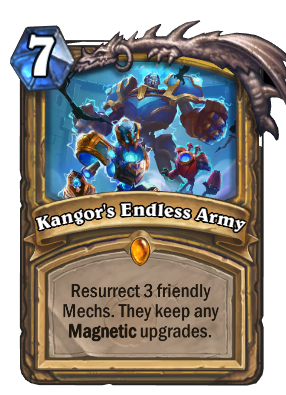
Only two Paladin cards interact with your discard pile (Immortal Prelate and Kangor's Endless Army).  These each define their own deck archetype as described below.

The Paladin cards include only three that interact with your hand (Glowstone Technician, Bronze Herald, and Dragon Speaker).  These currently are fun but not a key feature of any meta deck.

No Paladin cards interact with battlecries.  This is an intentional weakness for the hero.

The only Paladin card that interacts with deathrattle is the secret Redemption, which allows a minion's deathrattle to occur an extra time.  Small but significant!

Currently Paladin cards have a creature type synergy with mechs and dragons.  In the past murlocs and recruits were too, but no longer.

Filling your side of the battlefield with small minions is called a "wide board". Some other heroes have cards (Soul of the Forest, Soul of the Murloc) that make a wide board "sticky", meaning an effect that destroys all your minions will not actually leave your side of the battlefield empty because replacement minions stick around.  Paladin cards have no way to make wide board sticky.  This is an intentional weakness for the hero.

The Paladin cards include four to clear an opponent's wide board (Equality, Shrink Ray, Consecration, and Avenging Wrath).  Some decks combine these with the neutral minion Wild Pyromancer to increase their potency.

Some other heroes have minions (Timber Wolf, Tundra Rhino) or spells (Savage Roar, Bloodlust) that beneficially affect all the minions on your side of the battlefield.  Paladin cards have no way to empower all your minions.  However, this has been a feature of Paladin cards in the past and might return in a future expansion.

The only way Hearthstone cards allow you to act on your opponents turn is with secrets.  The Paladin cards include some really great secrets.

Three Paladin cards provide a surprise burst on your turn without needing a card combination (Blessing of Might, Blessing of Kings, Truesilver Sword).  Most decks include one of these to allow the player to punish the opponent for acting too greedy.

Section Two: Tempo from Secrets

Most Paladin decks include secrets.  These serve two purposes.

First, they ensure that player survives the early game.  This is especially true if combined with Commander Rhyssa.

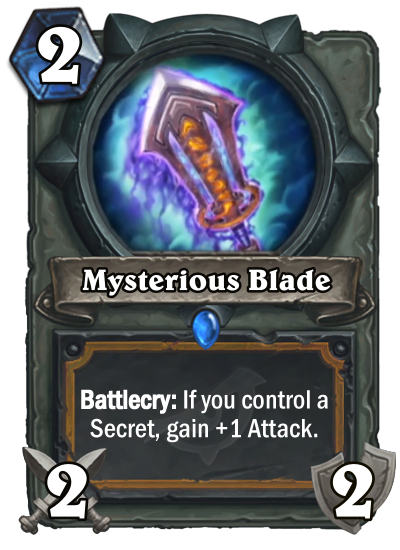
Second, the secrets provide the type of efficiency called "tempo".  Mysterious Blade and the neutral minion Sunreaver Spy both provide a lot of value for only two mana.  Early in the game, while many secrets are still in the deck, Prismatic Lens will often makes a big minion very cheap to play.  Later in the game Bellringer Sentry helps bring remaining secrets out of the deck so important minions are drawn sooner.

A common selection of secrets that promotes early game survivability and middle game tempo is: Autodefense Matrix, Hidden Wisdom, two copies of Never Surrender, Noble Sacrifice, and two copies of Redemption.

Section Three: Deck Archetypes

Secret Paladin

This deck archetype includes more secrets, Secretkeeper, Masked Contender, and Leeroy Jenkins.  If you own Subject 9 that card adds extra oomph.  The goal is to use the tempo created by secrets to wear down the opponent, and then use Leeroy Jenkins to finish the game.

The Magic Carpet variant includes the neutral minion Magic Carpet along with the 1-cost minions Argent Squire, Crystallizer, Mecharoo, and Glow-Tron.  It tends to be weaker than the meta version of Secret Paladin, but more fun to play.

Mech Paladin

This deck archetype builds up three big mechs, and then brings them back with
Kangor's Endless Army.  That goal is simple enough to be achievable, and powerful enough to win the game.


The Small Mech variant focuses on small, magnetic minions like Glow-Tron, Skaterbot, and Bronze Gatekeeper, enhanced by Call to Adventure and Glowstone Technician.  This variant is one of the few Paladin deck archetypes that include few or no secrets, instead relying on its small minions to survive the early game.


The Jepetto variant focuses on three minions whose effectiveness does not depend on their attack or health values: Mechanical Whelp, Mechano-Egg, and Faceless Manipulator.  The neutral minion Jepetto Joybuzz is used to draw these early.

The Fast Budget variant does not use Kangor's Endless Army.  Instead it works like a less effective Bomb Hunter, with a focus on quick damage by including Explodinator and Replicating Menace and attaching magnetic mechs to a wider board.  It is the weakest mech variant, but fun for players who do not own Kangor's Endless Army.

Big Spell Paladin

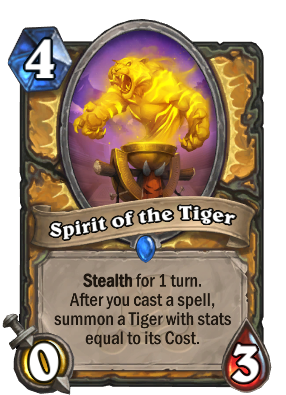
This deck archetype uses five big spells (two copies of Avenging Wrath, two copies of A New Challenger, and one copy of Lay on Hands) in combination with Spirit of the Tiger to rule the late game.  The spells are so strong that the bonus creation of big minions will surely overwhelm the opponent.

Things get even better when Archmage Vargoth replicates those spells and bonus minions!

The neutral minion Sunreaver Warmage is included for mid-game tempo.

Big Minion Paladin

This deck archetype uses Prismatic Lens and Duel to play huge minions like Amani War Bear, Batterhead, Tirion Fordring, and Ysera much earlier than otherwise.

Include whichever huge minions you own and enjoy.

To some extent Big Minion Paladin can be blended with other Paladin deck archetypes.  Have fun experimenting!

One Turn Kill Paladin

The goal of this deck archetype is to draw the entire deck (typically using the well-established combination of Wild Pyromancer and Acolyte of Pain), play Shirvallah, play Baleful Banker to put a copy of Shirvallah as your deck, and then play Holy Wrath to deal 25 damage.

The deck's second copies of Baleful Banker and Holy Wrath can repeat the combination for an additional 25 damage against opponents with a lot of armor.

The Nomi variant includes Chef Nomi as an alternate win condition.  This allows Shirvallah to be used in the middle of the game if needed, which can really help when the opponent has a very aggressive deck.

Either version may include the spells Time Out and/or Rebuke to help survive until victory happens.

Immortal Paladin

This deck archetype uses Crystology, Call to Adventure, and Witchwood Piper to draw the card Immortal Prelate.  That minion is buffed, used until it dies, and then returns with its buffs.  It grows throughout the game until the opponent is worn down.  If you own Da Undatakah that card adds extra oomph.

The Recurring Villain variant adds Recurring Villain as a second returning minion to buff.

Both versions can use either secrets or small mechs to survive the early game.

Dragon Paladin

This deck archetype uses dragons and Paladin cards that work with dragons.  Because most dragons have useful battlecries, the neutral minion Barista Lynchen is often included.

UPDATE: June 2019 had game development news about the intended flavor of all nine hero classes. It says:
Paladins are great champions who support their minions with buffs, healing, and divine shields; however, they are not afraid to get their hands dirty when the time comes. They are methodical, controlling the battlefield through debuffs and focused attacks instead of destructive spells. Strength and persistence are the keys to a Paladin’s victory.

Focuses on and excels at: minion swarms, minion buffs and debuffs, healing, divine shield, secrets
Limitated functionality with: cost reduction
Struggles to do: direct damage spells, destroying big minions

Thursday, April 18, 2019

What I Got from a Hearthstone Pre-Purchase


I tried but failed to love Hearthstone years ago, when the game had too many problems.

I recently tried again.  I am really enjoying the game.  Most of the early problems are fixed.
  • Daily quests do not all require winning games
  • The deck-builder automatically completes decks intelligently
  • Monthly ladder resets do not clump experts and newbies together
  • A "budget" meta deck without a specific legendary card is not crippled

For the first time, before last week's Rise of Shadows expansion I spent $80 on the big 80 pack pre-release bundle.  I am glad I did.

I expected two benefits.

First, when gaining new Rise of Shadows packs I would more quickly get dust from daily quests to craft cards I wanted.  This would be pleasant compared to the past expansion.  During the past three months I had just started getting noticeable dust income by the time a newer expansion appeared.

Second, I previously had one meta deck type named Odd Hunter that I could use in ranked play to see how much ladder progress my skill allowed.  I wanted a new meta deck to play on the ladder.

I did not realize how much more I would get.

Before I can explain further, I should describe what a "meta deck type" is for readers who do not play the game.  Here is a list of the currently best ones, two weeks into Rise of Shadows.


Right now the game is enjoying amazing balance.  Great job, designers!  Nine meta deck types have a win rate between 51.98% and 53.66%.  This is a very close spread: no one deck type is too dominant.  Moreover, eight of the nine heroes are represented.

Each of these deck types focuses on 10 to 15 cards.  A player who owns those can create a version of that deck type.

The improved game design means that missing a legendary card does not cripple its deck type.  The "budget" version of that any meta deck type might have one less trick up its sleeve, but still behaves similarly and can be nearly as successful on the ladder.

At the start of Rise of Shadows I was awarded a bunch of dust for owning certain now-obsolete cards, and for opening my pre-purchase packs.  An unexpected benefit was how I could create a bunch of key epic cards that my collection lacked, such as Sea Giant, CrystallizerMasked Contender, Magic CarpetMaster's Call, and Preparation.  Those opened up a whole lot of new options.

I expected to be able to build a new meta deck.  Now I can build five!  I can use the deck types named Midrange Hunter, Zoo Warlock, Imp Warlock, Secret Paladin, and Silence Priest.

For seven more deck types I can have fun with "budget" versions on the ladder: Token Druid, Recurring Villain Paladin, Tempo Rogue, Lackey Rogue, Resurrect Priest, Tempo Mage, and Spell Hunter.  For each of these I am missing only one legendary card (or a few epic cards of lesser total dust cost).  It is nice to have a shopping list of which cards I should craft next.

So I did get the jump-start I expected about getting more dust from daily quests to craft the cards I wanted.

And I did get not only one meta deck type to play, but five complete ones and seven more "budget" ones.

I also got a new way to relax.  Being able to use so many deck types means I now understand how those deck types work, and watching Hearthstone players on Twitch, YouTube, and in tournaments has become much more fun.

I also gained playing with my most fun cards.  I always found fiddling with decks to be time-consuming and not fun.  So when I owned cards that were fun but not powerful I seldom bothered to make decks to use them.  The improved deck-builder now lets me select a few cards and then will automatically finish the deck with the optimal other cards in my collection.  So I spent some of my dust on silly cards like Academic Espionage that will not help in ladder play but are providing a lot of fun in non-ranked games.

Finally, the improved deck-builder makes owning non-meta rare and epic cards more fun.  For example, the pre-purchase packs happened to give me Jumbo Imp.  That card is not currently part of any top-performing deck.  But it has potential.  I can auto-complete a deck seeded with just that card to see the most successful deck other players have designed for it so far.  And if other players ever do design a meta deck type that uses it, my deck-builder will use it appropriately.

Saturday, March 23, 2019

Feral Druid Macros

One of my World of Warcraft guild-mates had not heard of macro conditionals.  So I share my current macros for my Feral Druid, Ewyn, who sometimes uses the Guardian Druid specialization in dungeons.


Button 1 - Bleeds

#showtooltip
/cleartarget [dead]
/targetenemy [noharm]
/castsequence [mod:shift][form:1] Thrash; [spec:3] Bear Form; [noform:2] Cat Form; reset=target Rake, Primal Wrath


The button shows the proper picture and tool-tip for its current use.  It selects a new foe if needed.  When in Guardian specialization it uses Thrash if in bear form, or switches to bear form if not.  When in Feral specialization it switches to cat form if needed, then alternates between the two damage-over-time abilities Rake (makes a combo point) and Primal Wrath (spends combo points).

Button 2 - Build

#showtooltip
/cleartarget [dead]
/targetenemy [noharm]
/castsequence [mod:shift] Swipe; [form:1] reset=target Moonfire, Mangle, Swipe, Swipe, Mangle; [noform:2][nocombat] Prowl; Shred


The button shows the proper picture and tool-tip for its current use.  It selects a new foe if needed.  When in Guardian specialization it uses various attacks.  When in Feral specialization it switches to stealthy prowl mode if needed, or in combat uses Shred to build combo points.

Button 3 - Damage

#showtooltip
/cleartarget [dead]
/targetenemy [noharm]
/cast [mod:shift,spec:2] Primal Wrath; [nocombat,outdoors] Travel Form; [form:1] Maul; [noform:2] Cat Form; [combat] Ferocious Bite; Stampeding Roar
/cast [combat,form:2] Tiger's Fury


The button shows the proper picture and tool-tip for its current use.  It selects a new foe if needed.  It switches to travel form when appropriate.  When in bear form it uses Maul.  Otherwise it switches to cat form if needed, and then uses Ferocious Bite.  Outside of combat and indoors it uses Stampeding Roar.  Because the cat form ability Tiger's Fury is not on the global cooldown, a second "cast" can also use that ability whenever it is available.

Using Buttons 1, 2, and 3 without the shift key - Single Target Damage

When Ewyn is in cat form, her attacks on a single target are pretty simple.

She starts with button 1 to do the Rake damage-over-time.  Then a few presses of button 2 uses Shred to build more combo points.  Then returning to button 1 applies the Primal Wrath damage-over time.

Now that those two long-term effects are in place, she uses button 2 to build more combo points with Shred, and then button 3 to spend them with Ferocious Bite.

So fighting one foe is usually a sequence like: 1, 2, 2, 1; 2, 2, 2, 3; 2, 2, 2, 3; then start over because the damage-over-times have worn off.  (The exact number of 2's varies depending upon how fast the combo points fill up.)

Using Buttons 1, 2, and 3 with the shift key - Area-of-Effect Damage

When Ewyn is in cat form, her area-of-effect attacks are very simple.

When I hold down the shift key, and am in cat form, the above three buttons use Thrash, Swipe, and Primal Wrath.

Pressing shift and button 1 once uses Thrash, which is a similar damage-over-time to Rake but only causes one-quarter the damage.

Pressing shift and button2 uses Swipe, which is similar to Shred but only causes one-half the damage.  Repeat this until combo points are full.

Pressing shift and button3 uses Primal Wrath, which is the best way to spend those combo points for area-of-effect damage.

So fighting a group of four or more foes is a sequence of: 1, 2, 2, 2, 3, repeat.  (The exact number of 2's varies depending upon how fast the combo points fill up.  Sometimes they fill up so quickly the next 1 can be skipped.)

This is simpler than before because there is no area-of-effect equivalent to Ferocious Bite.

Button 4 - Interrupt One

#showtooltip
/cleartarget [dead]
/targetenemy [noharm]
/castsequence [nocombat,mod:shift] Flight Master's Whistle; [spec:2] Skull Bash; reset=6 Skull Bash, Incapacitating Roar


The button shows the proper picture and tool-tip for its current use.  It selects a new foe if needed.  When out of combat, the shift key has it use Flight Master's Whistle.  When in Feral specialization it uses the main interrupt called Skull Bash.  When in Guardian specialization it uses both Skull Bash and another interrupt named Incapacitating Roar.

Button 5 - Interrupt Two

#showtooltip
/cleartarget [dead]
/targetenemy [noharm]
/cast [nocombat,mod:shift] Grand Expedition Yak; Mighty Bash


The button shows the proper picture and tool-tip for its current use.  It selects a new foe if needed.  When out of combat, the shift key has it use the Grand Expedition Yak.  Otherwise it uses an interrupt called Mighty Bash.

Button 6 - Interrupt Three

#showtooltip
/cleartarget [dead]
/targetenemy [noharm]
/cast [mod:shift,nocombat,group] Obsidian Nightwing; [mod:shift,nocombat] Anglers Fishing Raft; [spec:3] Ironfur; [spec:2,combat] Maim; Fishing


The button shows the proper picture and tool-tip for its current use.  It selects a new foe if needed.  When out of combat, the shift key has it use either the Obsidian Nightwing if in a group, or the Anglers Fishing Raft if adventuring alone.  When in Guardian specialization it uses Ironfur for defense.  When in Feral specialization and in combat it uses a third interrupt named Maim.  Otherwise it goes fishing.

Saturday, November 24, 2018

Island Map

I made a map for a new Nine Powers campaign with my family.


Creating the image involved only a few steps.

Red Blob Games has an island maker.  My settings were these.  (Uncheck the box for "icons".)

GIMP is the free version of PhotoShop.  I made three adjustments.

1. Filters -> Blur -> Gaussian Blur -> Radius 2
2. Filters -> Artistic -> Clothify -> Blur 9, Azimuth 100, Elevation 45
3. Colors -> Levels -> Upper Input Level from 1 to 1.6


Inkscape is the free version of Illustrator.  I used it to add the rectangles and text.

UPDATE: The settings for my Arlinac Island map are these.